Vinyl or Wood: Choosing a Privacy Fence in Missouri
The honest trade-off between a fence that needs upkeep and a fence that needs a bigger check upfront.
September 15, 2026 · 4 min read
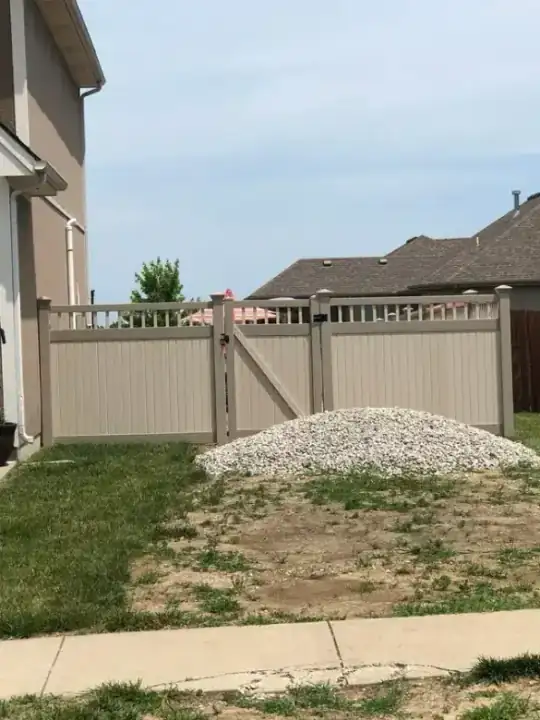
The Trade You're Actually Making
When people start looking at privacy fence, they usually frame it as a style question: do I want the classic wood look or the cleaner vinyl look. That's part of it, but the bigger decision is happening underneath. You're really choosing between two different relationships with your fence over the next fifteen or twenty years. One asks for a bit of your time every couple of summers. The other asks for a larger check on installation day and then mostly leaves you alone.
Neither answer is wrong. A lot of it comes down to how you feel about maintenance, how long you plan to stay in the house, and honestly, what the fence needs to look like on day one versus what you're willing to have it look like by year eight.
What Cedar and Treated Wood Actually Give You
Cedar has a natural resistance to rot and insects that pine doesn't have on its own, which is why it's the classic choice for a wood privacy fence. Left unfinished, cedar weathers to a soft silver-gray over a few years, a look plenty of homeowners like on purpose. Treated wood, usually pine that's been pressure-treated with preservative, costs less up front and holds up fine structurally, but it needs a stain or sealer to look its best and keep water from working into the grain.
Either way, wood is a material that wants a little attention. Sun-facing sections weather faster than shaded ones, and the bottom rail closest to the ground takes the most moisture. None of that means wood is a bad choice. It means the choice comes with a maintenance rhythm attached.
- Restain or reseal every two to four years depending on sun exposure
- Walk the fence line each spring and check for loose pickets or rails
- Keep grass and mulch pulled back from the bottom rail so it can dry out
What Vinyl Actually Gives You
CR Fence carries Veka and Country Estate vinyl, and the appeal is straightforward: it doesn't rot, it doesn't need painting or staining, and insects have nothing to chew on. A hose and a soft brush handle most cleaning. The upfront cost sits higher than treated wood, and that's really the whole trade in one sentence: you're paying more at installation so you're paying almost nothing in upkeep for the life of the fence.
Quality matters more with vinyl than people expect. Lower-grade panels can look flat or plasticky up close, while a heavier-gauge product holds its shape better through wind and temperature swings and reads as a more finished, intentional fence rather than a quick fix.
Year One Against Year Ten
In year one, the difference is mostly about warmth. Fresh cedar has a reddish-brown tone and a visible grain that a lot of people associate with a traditional Missouri backyard. New vinyl, whether white, tan, or almond, reads cleaner and more uniform right out of the gate.
By year ten the gap can widen depending on how the wood fence was cared for. A cedar fence that's been restained on schedule still looks good; one that's been ignored will show it, with graying, splitting, or a few pickets that need replacing. A vinyl fence that's just been hosed off now and then tends to look close to the day it went in, because there's no finish to wear off in the first place.
Who Should Pick Which
If you like the traditional look, don't mind a weekend with a stain brush every few years, and want the lower entry price, wood is the sensible pick. If you'd rather set it up once and mostly forget about it, especially if you travel a lot or just don't want fence maintenance on your yearly chore list, vinyl earns its higher price tag over time.
What Comes With Either Choice
Whichever material you land on, CR Fence backs the install the same way. Estimates are free before you commit to anything, and every job carries a one-year workmanship warranty once the fence is in the ground. The company is fully licensed and insured, and offers emergency services if something happens to your fence outside normal business hours.
If cost is the deciding factor between wood and vinyl, it's worth asking about the military discount and the financing options available before ruling either material out on price alone.
There's no wrong answer here, just a real trade-off worth thinking through before you commit either way. If you want to see both materials side by side and talk through what fits your yard, CR Fence offers free estimates. Give Randy and the team a call at (660) 463-2597 and they'll walk the property with you.
CR Fence LLC, (660) 463-2597
Call (660) 463-2597More articles
Fencing a Sloped Yard: What Changes and What to Ask
Ground that isn't flat changes how a fence gets built, and it's worth knowing the options before you pick a material.
Fencing a Farm or Ranch: Paddock, Pasture, and Lane
What actually differs between paddock rail, pasture fence, and lane gates on a working Central Missouri property.