Buying Fence Materials to Install Yourself: A Practical Guide
A practical walkthrough for measuring, counting, and planning a fence you're installing yourself.
September 15, 2026 · 3 min read
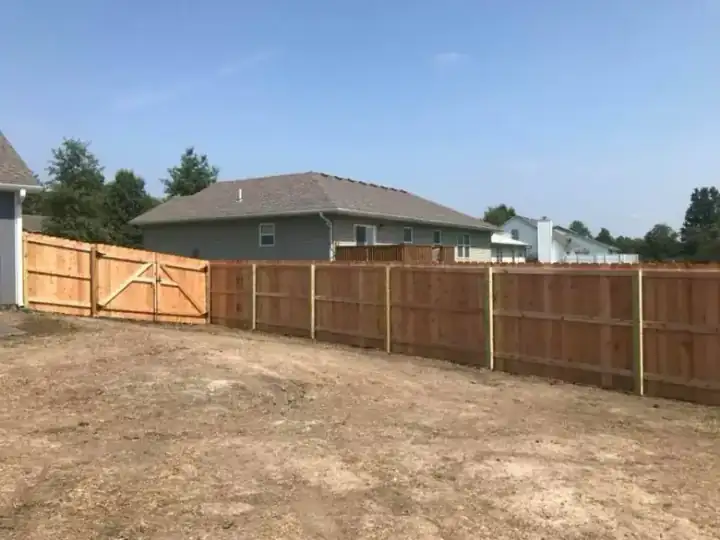
Material Sales, Not Just Installed Jobs
CR Fence sells fence material outright to homeowners who want to install it themselves, not just installed jobs, so if you're planning a DIY fence, getting the measuring and material count right up front saves you a second trip and a second round of shipping or pickup costs.
The starting point for any DIY fence is a straightforward measurement of the actual run, and it pays to be more careful about it than most people expect on a first project.
Measuring the Run
Walk the full property line you're planning to fence with a tape measure or measuring wheel, and write down the distance between every change in direction, not just the total length. A total footage number is close to useless for ordering material, since panels, posts, and rails all have to land at specific points along that line: corners, gate openings, and the end of each run.
Measure twice along any line that isn't perfectly straight, and note where the ground rises or drops, since that affects both material and layout, covered below.
Counting Corners, Ends, and Gates
Posts at a corner or a gate opening do more work than a post in the middle of a straight run. They're absorbing the pull from two directions instead of one, or carrying the weight and swing of a gate. Getting the count right means walking the line and marking every point where the fence changes direction, ends, or needs an opening, then counting posts from that map rather than estimating from total footage.
- Mark every corner, gate location, and end point on the ground before counting posts
- Count each gate separately, since gate hardware and post spacing differ from a plain run
- Order a few extra pickets or panels; a small buffer costs less than a second trip
It's easy to undercount corner and gate posts on a first pass, because they blend into the mental picture of one long fence. Treating each one as its own item on the list catches that before it becomes a shortfall on install day.
Allowing for Slope and Uneven Ground
If any part of your property isn't flat, decide up front: are you racking the fence to follow the ground, or stepping it down in level sections, since that decision changes how panels are cut and spaced. It's much harder to change your mind halfway through a run than to plan for it before ordering material.
Even a gentle slope can throw off a panel count if it isn't accounted for early, since racked or stepped sections sometimes use slightly different spacing than a flat run of the same length.
What Tends to Go Wrong for First-Timers
The most common first-time mistake is treating post spacing as a fixed number that applies everywhere, when in practice it needs to adjust slightly at corners, gates, and any point where the line isn't perfectly straight. The second most common mistake is not accounting for gate hardware and clearance until the gate is already framed in, which can mean it doesn't swing the way you expected.
Underestimating how much digging and post setting actually takes, especially in ground with rock or heavy clay, catches a lot of first-timers off guard too. Posts carry the whole weight and stability of the fence, so it's worth asking specific questions about how yours should be set for your soil rather than guessing.
When It's Worth Paying Someone
A short, straight run of fence on flat ground is a reasonable weekend project for someone comfortable with basic tools. A run with multiple gates, a real slope, rocky or heavy clay soil, or a layout with several corners is where a lot of first-timers find the project takes much longer than expected and the results are harder to get looking right.
There's no wrong choice here. Some people want the project and the savings that come with doing it themselves; others decide partway through the numbers that their time is better spent elsewhere. Either way, it helps to go in with accurate measurements and a realistic look at what the site actually requires. If you want to buy fence material for a DIY project, or you get partway through and decide you'd rather have it installed, CR Fence can help either way and offers free estimates. Call (660) 463-2597 and Randy's team can talk through your specific layout.
CR Fence LLC, (660) 463-2597
Call (660) 463-2597More articles
Vinyl or Wood: Choosing a Privacy Fence in Missouri
The honest trade-off between a fence that needs upkeep and a fence that needs a bigger check upfront.
Fencing a Sloped Yard: What Changes and What to Ask
Ground that isn't flat changes how a fence gets built, and it's worth knowing the options before you pick a material.